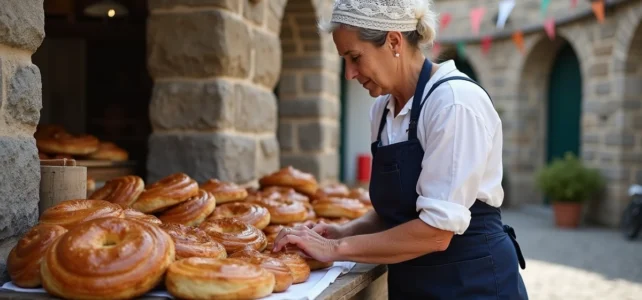
Brittany is not just a coastal postcard. Its food sectors, vibrant cultural practices, and micro-terroirs create a territory where each district claims a technical specificity, from butter salting to the cutting of a kig-ha-farz.
Breton Fermentations and Cured Meats: What the Terroir Owes to Microbiology
Breton semi-salted butter is not butter to which salt is added. The process relies on a controlled lactic maturation before salting, which produces diacetyl aromas absent in sweet pasteurized butters. The artisanal dairies of Léon or Trégor still work with endogenous ferments, sourced from their own production environment.
This logic of fermentation is found in farmhouse cider. Unlike industrial carbonated ciders, a Breton table cider undergoes natural carbonation in the bottle, sometimes over several months. The choice of apple varieties (bitter-sweet, acidic, sweet) determines the tannic balance of the final product. We observe that cideries that work with single-orchard blends achieve more distinctive aromatic profiles than those that buy on the spot market.
Cured meats, particularly the andouille de Guémené, involve a craftsmanship of layering intestines hand-threaded and smoked with beech wood. This process, lasting several weeks, has no equivalent in other French charcuteries. To explore in more detail the specialties and producers who uphold these traditions, a useful resource: https://www.littlebreizh.fr/.
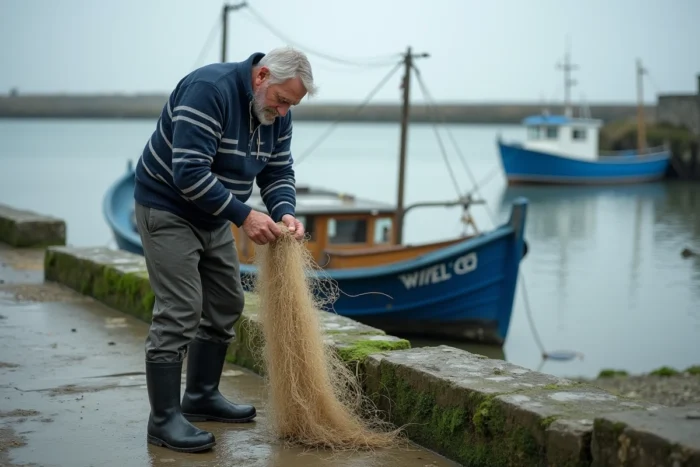
Breton Language and Fest-Noz: Evolving Intangible Heritage
The fest-noz, inscribed in UNESCO’s intangible cultural heritage, is not a folk dance for tourists. It is a social system of musical transmission through orality, where the musicians (biniou-bombarde) and singers (kan ha diskan) alternate according to precise rules of vocal relay.
The structure of kan ha diskan relies on overlapping voices: the second singer picks up the phrase before the first has finished it. This vocal layering maintains the rhythmic pulse for dancers without resorting to a percussion instrument. Technically, it is a medieval hoquetus that has survived in Breton popular practice.
The Breton language permeates these practices. The lyrics of gwerzioù (laments) and sonioù (songs) convey an ancient maritime, agricultural, and legal lexicon. Some terms have no French equivalent, making the translation of sung texts at best approximate.
Generational Renewal in Celtic Circles
Celtic circles, long perceived as aging structures, are experiencing a revival driven by young dancers trained in bagadoù. The rise of family- and youth-oriented cultural events, particularly in major venues like the Ateliers des Capucins in Brest, transforms heritage sites into spaces for living practice.
This renewal also extends to social media, where musicians broadcast live sessions, creating a bridge between traditional orality and digital dissemination.
Buckwheat Galettes: Cooking Technique and Regional Specificity
The distinction between crêpe and galette is not just about the flour. A traditional buckwheat galette is cooked on a cast-iron billig at high temperature, without added fat on the plate if it is properly seasoned. The batter, made solely of buckwheat flour, water, and salt, contains neither egg nor milk, unlike what most industrial creperies offer.
- In Upper Brittany (Rennes, Saint-Malo), “galette” refers to buckwheat and “crêpe” to sweet wheat. Cooking is done on one side only, with the filling placed before folding into a square.
- In Lower Brittany (Finistère, western Morbihan), the term “crêpe” refers to both buckwheat and wheat. The cooking is often finer, the galette more flexible, folded like a wallet.
- Breton buckwheat benefits from an IGP (Protected Geographical Indication) that regulates the origin of the grain and the milling conditions, ensuring traceability that imported flours from Eastern Europe cannot offer.
The quality of a galette is judged by its lace: this crispy, lacy edge that forms when the batter is sufficiently hydrated and the billig hot enough. A galette without lace indicates a defect in temperature or recipe.
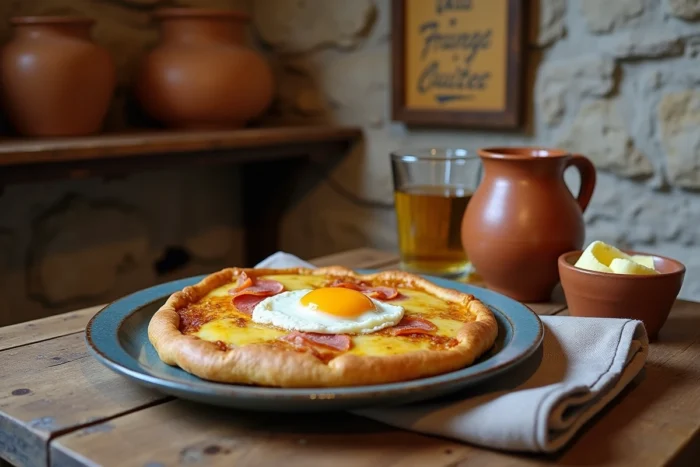
Breton Markets and Short Circuits: A Structured Terroir Economy
Weekly markets remain the main channel for direct sales for small-volume Breton producers. Unlike Provençal markets, often geared towards a tourist clientele, the markets in towns like those in Trégor or the Bigouden country maintain a local supply function. Fresh vegetables (camus artichoke, coco de Paimpol, pink onion from Roscoff) are sold at prices set by usage rather than by market rates.
The coco de Paimpol, the only French bean to have an AOC, illustrates this structuring. Its harvest, manual and seasonal, limits volumes. AOC producers adhere to a strict specification regarding authorized varieties, sowing dates, and drying methods.
Edible Seaweeds and New Marine Terroirs
Brittany concentrates almost all of the French harvest of edible seaweeds. Seaweed gatherers, regulated by prefectural authorizations, hand-harvest species such as wakame, kombu, or dulse. This is not a recent phenomenon, but its commercial structuring is: companies are now transforming these seaweeds into condiments, tartars, or flakes intended for gourmet restaurants.
The recent decline in tourist attendance in Brittany (approximately 108.7 million overnight stays in 2025, a decrease of about 2% compared to the previous year according to Tourisme Bretagne) is pushing local actors to focus more on qualitative experiences. Terroir gastronomy and vibrant cultural practices are becoming differentiation levers against more standardized seaside destinations.
This repositioning is not mere marketing. It is based on real sectors, documented know-how, and products whose specificity resists standardization. This is probably the best guarantee of sustainability for a territory that has always preferred substance over showcase.