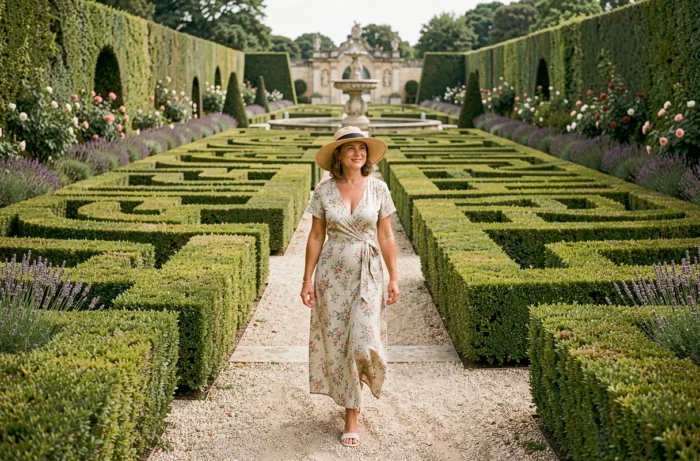
The richness of French gardens is not just due to their plant palette. Behind every labeled park or private estate open to the public, there are design choices, pedoclimatic constraints, and management logics that determine the visitor’s experience. Selecting the most beautiful gardens to visit requires going beyond a simple catalog to examine what truly distinguishes one site from another.
Substrate, exposure, and microclimates: what makes a garden’s botanical uniqueness
A remarkable garden is not declared solely by the will of the landscape designer. The nature of the soil, the water regime, and local microclimates dictate the available plant palette. An arboretum situated on acidic soil in an oceanic climate can host collections of rhododendrons and magnolias that are impossible to maintain in Mediterranean limestone terrain.
We observe that the most interesting gardens are precisely those that exploit a local constraint rather than fight against it. The dry gardens of the Mediterranean coast, for example, take advantage of the garrigue and xerophytic species to create landscapes that are coherent with their terroir.
This geological and climatic reading allows for informed destination choices. A lover of diverse botanical collections will favor the gardens of the Loire Valley or the Atlantic coast, while a Mediterranean plant enthusiast will benefit from exploring the estates of the Hérault or Provence hinterlands. Resources like escapades-aux-jardins.fr facilitate this sorting by grouping gardens by region and plant theme.

Remarkable Garden Label: attribution criteria and limits for the visitor
The Remarkable Garden label, awarded by the Ministry of Culture, certifies the quality of composition, botanical interest, maintenance, and landscape integration of a site. It serves as a reliable reference, but it does not cover all gardens worthy of interest.
Some private estates, due to lack of administrative resources or by choice, never apply. Other labeled sites have strong historical interest but limited plant diversity. The label does not guarantee botanical richness on its own.
We recommend cross-referencing the label with other indicators before planning a visit:
- The presence of a conservatory or a national plant collection, indicating a scientific commitment beyond ornamentation.
- The existence of partnerships with university botanical gardens, which ensure collection renewal and rigorous phytosanitary monitoring.
- The blooming calendar published by the garden itself, the only way to verify that the visit period coincides with a peak of visual interest.
Gardens and biodiversity: the ecological dimension as a visit criterion
The French Office for Biodiversity has been coordinating the LIFE BIODIV’FRANCE program since 2024, which integrates habitat restoration and the creation of ecological continuities in urban parks and gardens. This national policy changes the way we can perceive certain sites.
A park that voluntarily leaves an area fallow, installs insect hotels, or manages its lawns with late mowing is not a poorly maintained garden. It is a space designed to fulfill a specific ecological function. The Parc de Sceaux, the Domaine de Saint-Cloud, or certain parks in the Oise illustrate this evolution: their managers now arbitrate between horticultural aesthetics and ecosystem services.
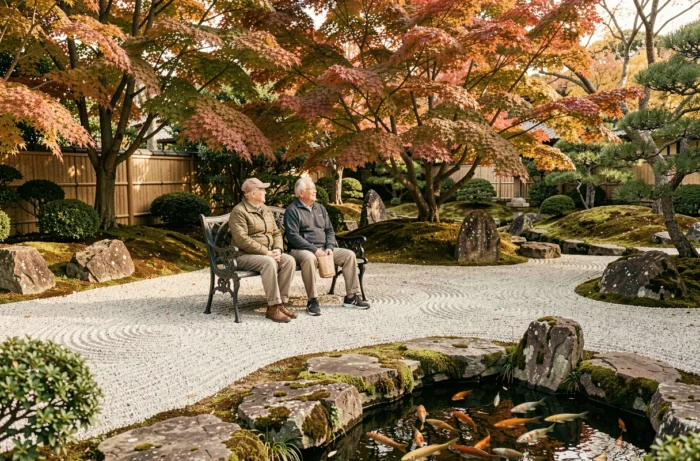
For the informed visitor, the differentiated management of a garden reveals the philosophy of its designers. A space where a well-tended rose garden, a flowering meadow, and a natural pond coexist offers a richer experience than an exclusively ornamental garden.
Accessibility of parks and gardens: an underestimated technical challenge
Since April 2025, sanctions have been imposed regarding the accessibility of establishments open to the public. Gardens open for visits are directly affected. Stabilized paths, slopes exceeding standards, lack of appropriate signage: obstacles remain numerous in historical estates.
The ONF and FNCOFOR are working on the accessibility of communal forests, and the Île-de-France region is funding a fifth phase of accessibility for its leisure islands. These efforts show that the accessibility of green spaces is an ongoing project, not a given.
Before traveling, we recommend checking:
- The type of surface on the main paths (compacted stabilized, gravel, slabs), which determines the feasibility for wheelchair users or those with strollers.
- The availability of a visit plan in an accessible version (large print, braille, audio description).
- The parking options close to the entrance, especially in large estates where parking may be several hundred meters away.
Visiting periods and seasonal anticipation for gardens in France
A garden is not visited out of season by chance. Collections of winter-flowering plants (witch hazel, hellebores, mahonias) transform an arboretum into a destination in January. Rose gardens reach their peak between late May and mid-June. Mediterranean gardens are best discovered in autumn, when temperatures drop and watering resumes.
The choice of the month of visit conditions at least half of the experience. A Loire Valley château visited in August offers structured boxwood beds but little spectacular flowering, while the same site in May presents a completely different chromatic density.
The most rigorous estates publish a month-by-month phenological calendar. This is an indicator of seriousness: a garden that communicates about its seasonal lows as much as its flowering peaks deserves the visitor’s trust.
The rise in the creation of gardens in France, which now represents more than half of the revenue of the landscape sector, reflects a lasting enthusiasm from the public. This dynamic also benefits gardens open to visits, which enjoy a more informed, demanding, and better-informed audience regarding the botanical and ecological issues of each site.