The clitoral piercing usually refers to a piercing of the clitoral hood rather than the glans itself. This anatomical distinction affects the level of pain, the risks involved, and the sensory outcome. Understanding what is actually being pierced, and under what conditions, helps assess whether the procedure aligns with one’s anatomy and expectations.
Clitoral Hood or Glans: What the Piercing Actually Passes Through
The confusion between hood piercing and glans piercing is still common. The hood is a fold of skin that covers the glans, serving a protective role. Piercing the glans itself is rare and discouraged by almost all professional piercers due to the risk of extreme pain and irreversible loss of sensitivity.
In practice, when a studio offers a “clitoral piercing,” it almost always refers to a hood piercing, either vertical (VCH) or horizontal (HCH). The VCH passes through the hood from top to bottom, with the jewelry resting against the glans. The HCH goes horizontally through the skin fold, without direct contact with the glans.
Those who wish to delve deeper into the procedure can consult how to get a clitoral piercing on Mes Conseils Beauté for a detailed description of each variant.
| Criteria | VCH (Vertical Hood) | HCH (Horizontal Hood) | Clitoral Glans (Direct) |
|---|---|---|---|
| Pierced Area | Hood, vertical axis | Hood, horizontal axis | Glans itself |
| Frequency of Procedure | Very common | Common | Very rare |
| Estimated Healing Time | Several weeks to a few months | Several weeks to a few months | Variable, often prolonged |
| Risk of Sensitivity Loss | Almost none | Almost none | High |
| Jewelry/Glans Contact | Yes (indirect stimulation) | No or partial | Permanent and direct |

Anatomical Compatibility: The Criterion Most Articles Overlook
Not all anatomies are suitable for hood piercing. This is a point rarely addressed in search results, yet it determines the feasibility of the procedure. The hood must be sufficiently developed and visible to accommodate jewelry without excessive tension on the tissues.
An experienced piercer conducts a morphological assessment before any procedure. This inspection checks the thickness of the fold, its mobility, and the depth of the groove. If the hood is too thin or too short, the piercing may migrate, be rejected by the body, or cause chronic irritation.
The choice between VCH and HCH also depends on this anatomy. A very narrow hood will lean towards a VCH, while a wider hood allows for a choice between both axes. Refusing a piercing for anatomical reasons is a sign of professionalism, not a whim of the piercer.
Minimum Jewelry Size and Materials
The initial jewelry must have a diameter of at least 1.6 mm to limit the risk of rejection and tearing. Recommended materials include implant-grade titanium, medical-grade surgical steel, or niobium. 14 or 18-carat gold is also suitable, provided it is solid and not plated.
Jewelry that is too thin or made from allergenic metals (nickel, brass) increases the risk of local inflammation and delayed healing.
Post-Piercing Care: Actions That Speed Up or Delay Healing
The healing of a hood piercing generally takes several weeks to a few months, depending on the care taken and individual responsiveness. The intimate area, being moist and subject to daily friction, requires rigorous but non-aggressive hygiene.
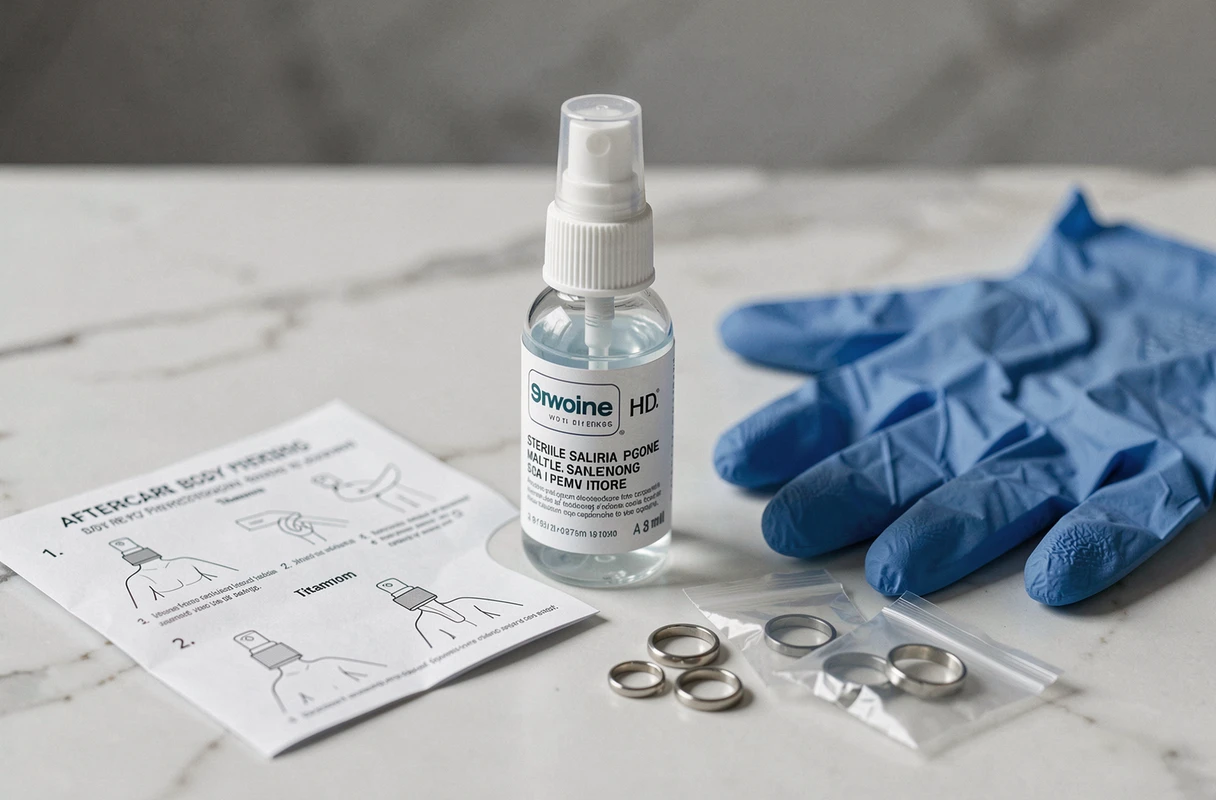
- Clean the area with a sterile saline solution (physiological serum) morning and evening, avoiding aggressive disinfectants like alcohol or betadine that dry out the tissues.
- Wash hands with antiseptic soap before each handling of the jewelry, and never twist, move, or pull on the jewelry during healing, as these actions irritate the canal and delay healing.
- Avoid public pool baths, jacuzzis, and stagnant waters during the initial healing phase to limit the risk of bacterial infection.
- Opt for loose cotton underwear and avoid clothing that creates prolonged friction in the area (very tight jeans, synthetic tights).
Sexual intercourse should be suspended during the first phase of healing, typically about one month after the procedure, to avoid any mechanical trauma or contamination. The use of a condom is then recommended until healing is complete.
Pain and Session Procedure in the Studio
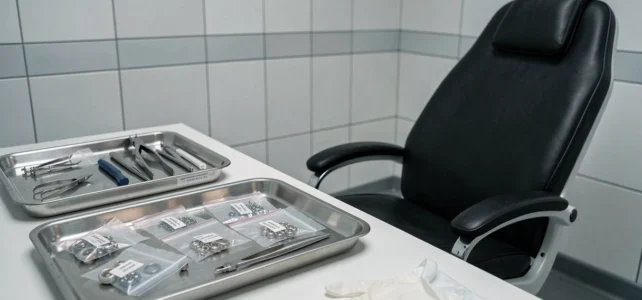
The piercing itself lasts only a second. Preparation takes up most of the session, about twenty minutes: disinfecting the area, taking measurements, marking with sterile marker, unpacking single-use equipment, explaining care.
Pain is described as sharp but brief. The hood area is less innervated than the glans, making the procedure significantly more tolerable than a direct piercing. The sensation is akin to a quick pinch, followed by a local warmth that fades within a few minutes.
Warning Signs After Placement
Light swelling and clear secretions in the following days are normal. However, spreading redness, yellowish or greenish pus, increasing pain, or fever warrant prompt medical consultation. An untreated infection can lead to an abscess requiring jewelry removal and antibiotic treatment.
The choice of studio remains crucial. A professional trained in intimate piercings works with sterile single-use equipment, in a dedicated space that offers privacy and hygiene. Checking for the presence of an autoclave, the use of needles (never a gun), and requesting to see the sterilization protocol before making an appointment are reflexes that protect both health and the final result.