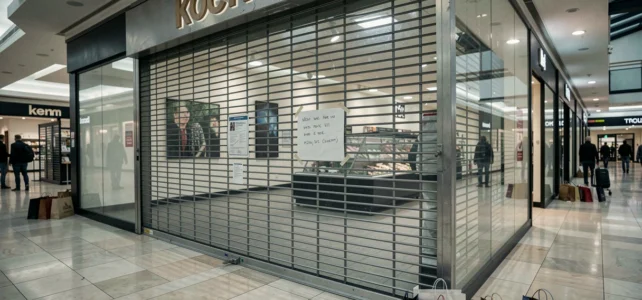
The closure of Bershka in Reims is not a result of a local commercial accident. It reflects a portfolio decision driven from Inditex’s headquarters, where every square meter of retail space must meet a profitability threshold heightened by the rise of integrated e-commerce.
Streamlining the Inditex network: the model dictating closures
Inditex has reduced its global footprint by about a quarter since 2018, while increasing its total sales area and profits. The group favors larger flagship stores, connected to the digital channel, capable of serving as a logistical hub for click-and-collect and in-store returns.
In this framework, a mid-sized store located in a medium-sized city shopping center becomes structurally unprofitable. The occupancy cost (rent, common charges, property tax) is no longer justified when sales per square meter stagnate below the threshold set by the group’s financial management.
We observe the same mechanism in Saint-Nazaire, where Zara, Bershka, Pull&Bear, and Stradivarius are simultaneously leaving the Ruban Bleu shopping center. This is not a coincidence: Inditex closes in geographical clusters to reallocate human and logistical resources to premium locations. Reims fits into this reallocation logic, not into that of an isolated failure.
To better understand the closure of the Bershka store in Reims, this movement should be read as a global financial arbitration rather than a signal of disaffection for the city.
Bershka Reims and the decline of clothing retail in city centers

The departure of Bershka is part of a trend documented by several institutional reports: the de-commercialization of medium-sized city centers. Clothing brands are among the most affected, with a marked decline in the number of stores and jobs in this sector.
Reims has already lost other brands. Le Furet du Nord closed at BHV, and discussions for a takeover are ongoing without certainty of a timeline. The Maxi Bazar in the city center closed its doors in 2024. Each closure reduces the attractiveness of the commercial hub and accelerates the departure of remaining brands.
Domino effect on foot traffic
A commercial locomotive like Bershka generates a flow of visitors that benefits neighboring businesses. Its disappearance causes a decline in foot traffic that is difficult to compensate for, especially when the “personal equipment” category simultaneously loses several players.
A replacement by a brand of the same category is unlikely in the short term. Expanding clothing brands today target suburban retail parks or large metropolitan areas, rarely the city center locations freed up in medium-sized towns.
Consequences for employees and commercial leases in Reims
The closure of an Inditex store follows a well-established social protocol. The group generally offers internal relocations to other stores in the area, which assumes the existence of an accessible Zara or Stradivarius store. If these brands close simultaneously in the same urban area, internal mobility options are significantly reduced.
- Employees on permanent contracts may be offered a geographical transfer to a regional flagship, often located more than an hour away by transport.
- Part-time contracts, which are predominant in textile retail, rarely benefit from the same support measures.
- The social plan, when activated, remains calibrated to the conventional minimums of retail, with modest compensation relative to average seniority.
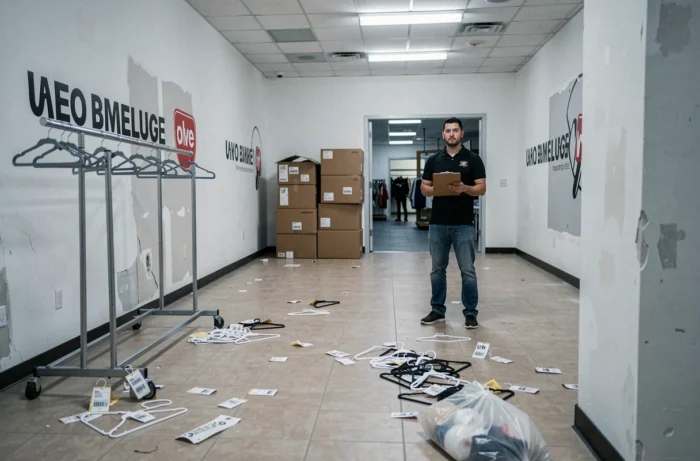
On the commercial real estate side, the freed space enters an already tight rental market. City center landlords face a double problem: historically high rents and declining demand in the textile segment. Negotiating a new lease often takes several quarters, during which the space remains vacant and weighs on the street’s attractiveness.
The future of local commerce in Reims after Bershka
The issue goes beyond Bershka. What is at stake is the restructuring of the commercial fabric of Reims around less volatile categories than fast fashion ready-to-wear. The territorial strategies for consolidating local commerce, documented by the Banque des Territoires, rely on three levers:
- Diversification towards services (health, coworking, quality food) that generate recurring visits and cannot be substituted by e-commerce.
- Reduction of vacant spaces through derogatory leases or temporary occupations (pop-up stores, third places).
- Public support for the establishment of independent businesses through declining rent aids over three years.
Replacing an international brand with an independent business does not compensate for the lost foot traffic, but it stabilizes occupancy and slows the vacancy spiral. Several medium-sized French cities are experimenting with this type of measure with mixed results.
What buyer for the Bershka space?
Potential buyer profiles range from discount brands (still expanding), fast food operators, and service providers. The size of the space and its configuration will guide the choice. A space designed for textiles, with large reserves and little partitioning, is poorly suited for certain activities without significant renovations.
The municipality and the landlord have an interest in anticipating this transition rather than waiting for a candidate to come forward spontaneously. The average time to re-rent a commercial space of this size often exceeds a year in medium-sized French cities, according to observations from industry professionals.
The closure of Bershka in Reims marks a milestone in the reconfiguration of downtown commerce. The coming months will reveal whether the city can turn this constraint into an opportunity for diversification, or if the space will be added to the growing list of darkened storefronts.