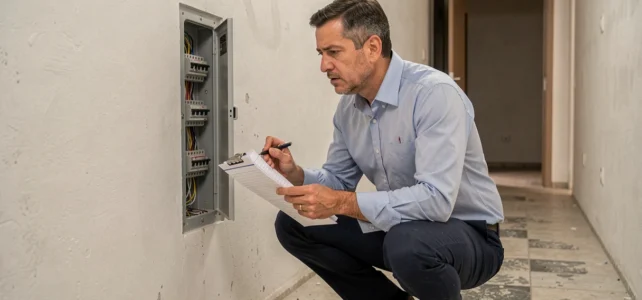
A tenant terminates their energy contract a few days before returning the keys. On the day of the appointment, it is impossible to turn on a light bulb or test an outlet. Conducting an inventory without electricity exposes both parties to concrete consequences, far beyond mere practical inconvenience.
Linky Meter and Termination: Why the Power is Not Completely Cut Off
Many tenants believe that terminating an electricity contract results in a total cut-off. With a Linky meter, the reality is different. After termination, the power is often reduced to 1 kVA, a level insufficient to power anything beyond a low-energy light bulb.
In practice, you may notice the presence of residual current without being able to test an oven, a water heater, or a ventilation system. This minimal power gives a false impression of functionality. Equipment that consumes more immediately triggers the circuit breaker.
For both the owner and the tenant, this situation creates ambiguity: the meter displays a reading, but checks remain impossible. The document signed under these conditions poorly reflects the reality of the housing. Cutting off electricity before returning the keys can also have underestimated consequences, as detailed in this analysis on inventory without electricity.
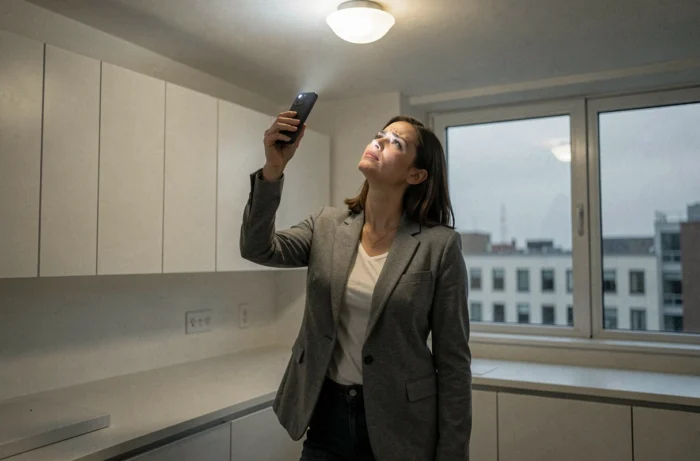
Missing Meter Reading: The Risk of Billing for the New Tenant
Have you ever noticed the three lines provided for meter readings on an inventory form? They often remain empty. No penalty is provided when this section is not filled out. An inventory signed without a meter reading remains legally valid, which explains why so many documents are incomplete on this point.
The problem arises after the signing. In the absence of an entry reading signed by both parties, the energy supplier most often retains the reading declared by the previous occupant or an estimate. The new tenant may then find themselves billed for consumption that is not theirs.
The Contradictory Reading Protects Both Parties
When the power is cut off, the meter sometimes becomes inaccessible or unreadable. The outgoing tenant loses proof to contest an overbilling. The incoming tenant inherits a potentially incorrect reading. Without a signed contradictory reading, each party loses their best evidence in case of a dispute with the energy supplier.
The solution lies in one line on the document: note the visible reading at the time of the appointment, or explicitly mention the impossibility of taking a reading and the reason (meter off, display absent).
Incomplete Inventory: What Case Law Really Says
A ruling from the Court of Cassation on November 16, 2023 (3rd civ., n° 22-19.422) established a clear principle. An exit inventory unilaterally established by the landlord cannot serve as proof of damages if the lack of contradiction is attributable to the landlord themselves.
In other words, if the landlord organizes the inventory under conditions that prevent a proper check (absence of power, insufficient lighting to assess the condition of the walls and floors), they risk having the document contested in court.
The Trap of the Partially Signed Report Without Reservations
Signing an inventory “as is” without noting the impossible checks binds both parties. A signed document is considered final. Simple reservations added afterward do not allow it to be completed without a contradictory procedure.
Here are the mentions that must be included on the document when electricity is lacking:
- The absence of power at the time of the appointment, with the known reason (contract termination, outage, voluntary cut-off).
- The precise list of untested equipment: outlets, lighting, mechanical ventilation, electric heaters, intercom, roller shutters.
- The mention “partial inventory” with a clause providing for a contradictory supplement after power restoration.
This clause may provide for the involvement of a judicial officer, with costs shared between the parties.
Common Mistakes That Turn an Inventory Without Power into a Dispute
The first mistake is signing without any reservations. The tenant who signs an incomplete document effectively waives their right to contest unobserved damages. The landlord who signs without mentioning the impossibility of checking electrical equipment loses their right to deductions from the security deposit for these items.
The second mistake concerns the timing. Terminating the electricity contract before the date of the exit inventory creates the problem at the source. The supply contract should remain active at least until the day after the keys are handed over.
When to Postpone the Appointment
Postponing an inventory is not always possible, especially when the lease ends on a fixed date. Postponing is preferable to signing an unusable document. If the tenant refuses to restore power, the landlord can call upon a judicial officer to establish a contradictory report under proper conditions.
Here are the situations where postponement is necessary:
- No light source allows for inspection of windowless rooms (bathroom, cellar, pantry).
- The housing has exclusively electric heating and the condition of the heaters cannot be verified.
- The mechanical ventilation system (VMC) cannot be tested while visible signs of humidity are present.
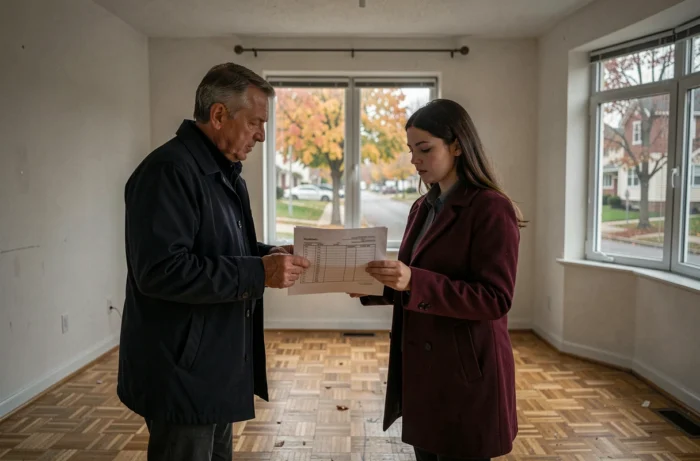
An inventory conducted without electricity is not null in itself, but it becomes a fragile document. The difference between an exploitable document and a contestable document often comes down to three lines of reservations that no one takes the time to write. Noting what could not be verified protects both the tenant and the owner.