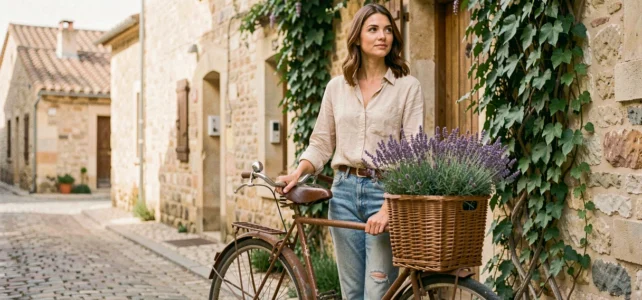
Going on vacation in the south or settling down in a large tourist city is something we know well. Exploring France differently this year means changing the method before changing the destination.
Traveling by regional train: the itinerary that changes the destination
We often underestimate how much the mode of transport shapes the journey. Taking a TER instead of a direct TGV requires stopping at intermediate stations, crossing landscapes that are never seen from the highway. This is where the journey truly begins.
In Île-de-France, the fare simplification of the transport network launched on January 1, 2025, remains in effect: old paper tickets and booklets have disappeared in favor of a unified system. This new system facilitates connections between Paris and the small towns nearby, making it easier to combine train and bike to reach villages off the classic routes.
On the practical side, one can plan a route in France by relying on regional lines to connect stages like the Creuse Valley, the Morvan, or the foothills of the Pilat. These areas remain preserved from mass tourism.
Several platforms today allow you to compare transport and accommodation options in one place, just like on voyagoo.fr to organize a multimodal trip without wasting hours cross-referencing sites.
Micro-adventure in France: sleeping where no one books
The micro-adventure requires neither a significant budget nor weeks of vacation. It is based on a simple principle: sleeping within two hours of home in an unexpected place. A night camping in a designated area in the Vercors Regional Natural Park, an unguarded refuge in the Vosges, a winemaker’s cabin in the Jura.
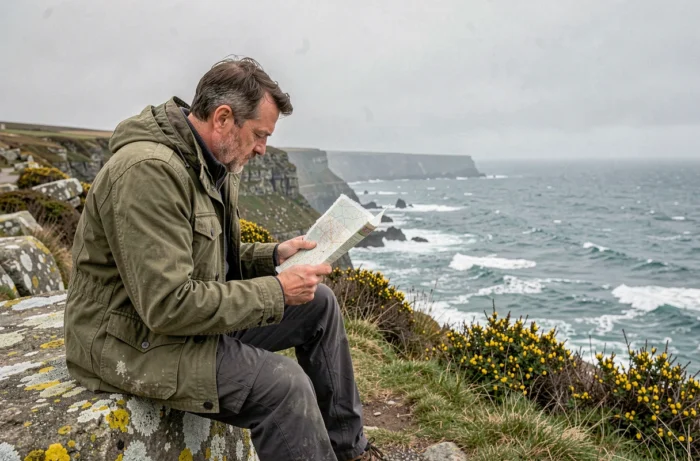
What distinguishes this approach from classic slow tourism is that we are not looking for the perfect destination. We set off with a constraint (a radius, a mode of transport, a theme) and see what the territory offers. Feedback varies on this point, but those who regularly practice micro-adventure describe a more attentive, almost sensory relationship with the landscape.
Here are some formats that work well in France:
- A weekend of loop hiking in a little-frequented massif (Margeride, Morvan, Thiérache), with accommodation with locals or in a community lodge
- A two-day canoe river descent, with camping on the banks (the upper Dordogne or the Allier offer calm and accessible sections)
- A bike route from village to village on greenways, favoring converted old railway lines
Industrial heritage and forgotten villages: territories to rediscover on foot or by bike
There is much talk of charming villages, vineyards, and Provençal markets. Less about redeveloped industrial wastelands, rehabilitated mining towns, or disused canals. French industrial heritage constitutes a field of exploration in its own right, and it is often free to access.
The Nord-Pas-de-Calais mining basin, listed as a UNESCO World Heritage site, offers walking or biking routes among the vegetated spoil heaps. The atmosphere there is radically different from what is usually associated with a travel destination in France. You walk on artificial hills covered with birch trees, encountering contemporary artworks installed in former sorting buildings.
In a similar vein, the old saltworks of the East (Salins-les-Bains, Arc-et-Senans) blend monumental architecture with technical history. They are not frozen museums: several sites host artist residencies and outdoor events during the summer season.
Slow tourism and soft mobility: organizing a sustainable trip without overpaying
Slow tourism is not just about slowing down. It is also a matter of logistics. Traveling by bike or regional train costs less than renting a car and paying tolls, provided you prepare your stages well.
Here’s what to check before leaving:
- The possibility of bringing a bike on the TER (some regions limit the number of spots, especially in summer)
- The existence of luggage lockers at intermediate stations to lighten a day of visiting
- Accommodations that accept late arrivals without extra charge, a criterion often overlooked when relying on train schedules
- Mobile network coverage in the rural areas crossed, to avoid being left without a map or GPS in the countryside
A well-timed itinerary based on TER schedules allows you to visit three regions in a week without ever touching a steering wheel. The south of Burgundy towards Beaujolais, for example, is perfectly suited to this format: the stations are close, the villages accessible on foot from the stops, and the offer of guesthouse accommodation remains affordable outside of July-August.
The change lies in the mode of transport, the chosen pace, and the ability to stop where nothing was planned. The most interesting territories are often those we pass through without seeing, between two major cities, along a railway line, or at the end of a towpath.