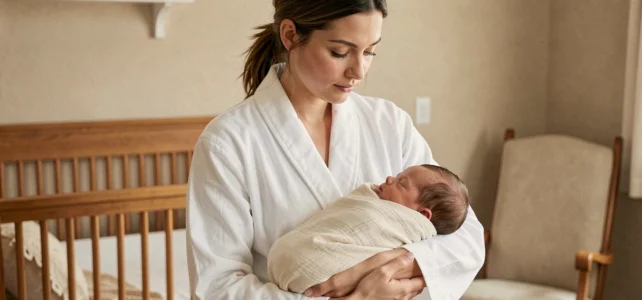
Welcoming a newborn refers to the period from returning home from the maternity ward to the first months of life at home. This phase requires both practical skills (sleep, feeding, care) and a profound reorganization of family daily life. Since July 2026, the French legal framework has evolved with the additional birth leave, which concretely changes how parents can organize themselves during the first weeks.
Birth Leave 2026: What Changes for New Parents
The Social Security financing law for 2026 has created an additional birth leave applicable to children born or adopted from January 1, 2026. This scheme differs from traditional parental leave due to its flexibility: each parent can take one or two months, in one or two periods, within nine months after the birth or arrival of the child at home.
Both parents can benefit from it simultaneously or alternately. Compensation is provided directly by Social Security, with a more favorable income replacement logic than the previous parental education leave.
On the employer side, obligations have changed. Companies must adapt their HR and reporting processes, with the first declarations in DSN expected from August 2026 for the periods of July. For working families, this means that effective access to leave also depends on the employer’s administrative circuits. Checking that the HR department has properly integrated the scheme before the birth avoids payment delays.
Exploring resources like Bébés du Bonheur on Bébé Bonheur allows for additional preparation with concrete references on daily family life.
Newborn Sleep: Establishing a Rhythm Without Force
Sleep is the primary source of parental exhaustion. A newborn sleeps in short cycles, spread throughout the day and night, without distinction. Trying to impose an adult rhythm from the first weeks is counterproductive.
The most effective approach is to synchronize the parents’ rest with that of the baby, at least partially. Sleeping when the baby sleeps, even during the day, compensates better for nighttime sleep deficits than sleeping in on weekends.
Sleeping Environment
The baby’s room (or the sleeping space in the parents’ bedroom) must meet a few specific criteria:
- Temperature maintained around a moderate range, neither too hot nor too cold, with a room thermometer to check
- Firm mattress, without cushions, comforters, bumpers, or stuffed animals in the crib, in accordance with recommendations for preventing sudden infant death syndrome
- Seasonally appropriate sleeping bag rather than a blanket, to limit the risk of suffocation
- Position on the back, the only recommended sleeping position for infants
A safe sleeping environment takes precedence over decoration. The furniture in the room can remain simple for the first months; the baby does not need it, nor do the parents.
Parents’ Health After Childbirth: An Underestimated Topic
The health of the newborn receives all the medical attention, but that of the parents, particularly the mother, often takes a back seat. Physical recovery after childbirth takes several weeks. Perineal pain, fatigue related to breastfeeding or nighttime bottle feeding, and hormonal fluctuations create a set of challenges that cannot be resolved with good intentions.
The mother’s postnatal follow-up deserves as much attention as the baby’s pediatric visits. Perineal rehabilitation, prescribed by the doctor or midwife, generally begins after the postnatal visit. Delaying it due to lack of time worsens issues in the medium term.
Identifying Psychological Warning Signs
Baby blues affect a majority of mothers in the days following childbirth and resolve spontaneously. Postpartum depression, on the other hand, lasts longer and requires professional support. Persistent sadness beyond two weeks, loss of interest in the baby, overwhelming anxiety, or sleep disturbances independent of those of the infant are signs that warrant a consultation.
The second parent is not spared. Paternal psychological distress after a birth remains largely underreported, even though it affects the couple’s balance and the quality of care provided to the baby.

Distribution of Responsibilities in the Couple with a Newborn
The arrival of a baby redistributes domestic roles, often in an unbalanced way. The mental load related to medical appointments, diaper supplies, daily laundry, and managing feeding often falls on one parent.
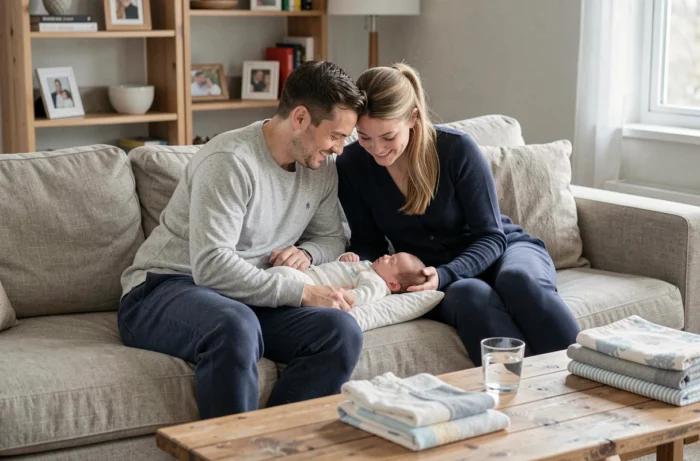
The new birth leave offers a concrete window to establish a more equitable distribution from the start. When both parents are present at home during the first weeks, each develops their own caregiving routines rather than functioning as the “assistant” to the primary parent.
A simple method is to divide not the individual tasks, but the time slots. One parent takes care of the night until a certain hour, the other takes over. This division avoids constant negotiations and guarantees each a block of uninterrupted rest.
Couple Life and Newborn
The couple’s relationship goes through a normal turbulence zone after a birth. Fatigue, lack of intimacy, and disagreements about parenting create friction. Maintaining moments of exchange, even short ones (a shared meal without phones during the baby’s nap), preserves the bond. The goal is not to return to life as it was before, but to build a new one that integrates the baby without erasing the couple.
The additional birth leave, with its possibility of simultaneous take-up by both parents, serves as a concrete lever to navigate this period together rather than in a constant relay. Families who access this scheme from the first weeks lay more sustainable foundations than those who try to rectify the imbalance months later.