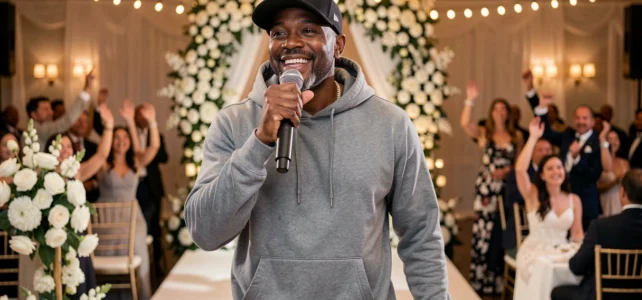
When organizing a wedding and dreaming of a strong moment on the dance floor, the name Soprano often comes up. The problem is that booking an artist of this caliber doesn’t work like hiring a local band or a DJ. The budget for inviting Soprano to sing at your wedding depends on very concrete variables, some of which only become apparent after the first contact with the agency.
Soprano fee for weddings: what actually makes up the bill
We often imagine a single price, a round figure that we negotiate and then pay. The reality of a private concert with a nationally recognized artist is more fragmented. The artist’s fee itself represents only a part of the total amount.
Several items add to this fee, increasing the overall cost. The travel expenses for the artist and their technical team (sound engineer, musicians, stage manager) generate transportation and accommodation costs that vary greatly depending on the location of the venue. A wedding in Provence does not incur the same logistical costs as an event in the Paris region.
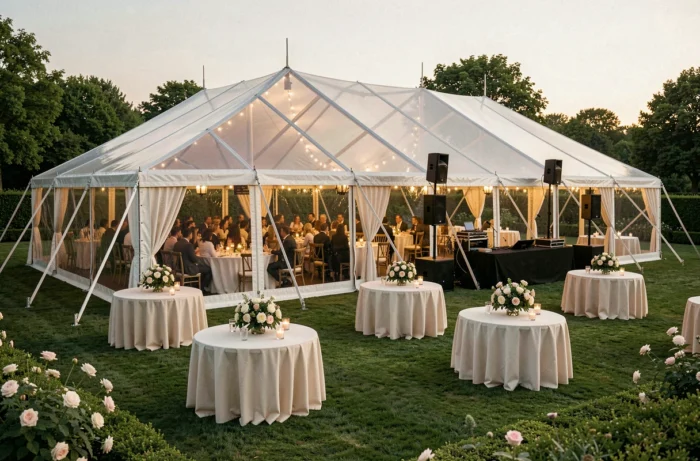
We often tend to underestimate the technical aspect. Soprano performs with professional sound equipment, stage lighting, and sometimes a stage set up for the occasion. If your reception venue does not have suitable infrastructure, the technical performance can represent a budget item as heavy as the fee. To better understand how much it costs to bring Soprano to a private setting, these items need to be included from the first estimate.

Declaring an artist for a private wedding: the GUSO framework
This is the point that most engaged couples discover too late. When an individual hires a live performance artist for a private party, they temporarily become an employer. The system set up for this situation is called GUSO (Guichet Unique du Spectacle Occasionnel), managed by France Travail.
The GUSO is mandatory for any employer whose main activity is not entertainment. In practice, the artist is declared through this portal, social contributions are paid, and that’s it. The process is simplified, but it exists and cannot be legally bypassed.
- The GUSO covers the declaration, payment of contributions, and issuance of the payslip in a single procedure.
- An occasional organizer cannot exceed 6 performances per year through this system, under penalty of needing to obtain a receipt as a live performance entrepreneur.
- In 2026, the minimum gross fee for a musician according to the CCNEAC scale is around 152.83 euros gross per performance, a floor that was revalued in 2025-2026.
For an artist like Soprano, the actual fee obviously far exceeds this minimum. The scale serves as a reference for accompanying musicians and technicians declared individually.
Negotiating Soprano’s price for a private event
You do not contact Soprano directly. All requests go through an agent or a booker specialized in private events. This first exchange leads to a pricing proposal that is never fixed.
Several levers allow for budget adjustments without degrading the performance:
- Reducing the duration of the set (a 30 to 45-minute slot costs less than a one-and-a-half-hour concert with encores).
- Choosing a date outside of peak demand periods (the months of June and September concentrate most weddings, so fees are tighter during those times).
- Offering a reception venue close to the artist’s home or on a date of an existing tour, which reduces travel expenses.
- Simplifying the stage setup by relying on the technical infrastructure already present in the venue.
The margin for negotiation mainly depends on the artist’s schedule. If Soprano is on tour and your wedding falls the day before or after a nearby date, the agent will be more inclined to adjust the fee. Feedback varies on this point, but it is a lever regularly cited by event professionals.
Alternatives to a full concert: performance formats suitable for weddings
Not all couples dreaming of Soprano have the budget for a full show with a band, sound, and lights. There are intermediate formats that remain memorable for the guests.
An acoustic set in duo (voice and guitar or voice and piano) requires less logistics, fewer technicians on site, and a generally reduced fee. The atmosphere gains intimacy, which often suits a wedding better than an amplified outdoor concert.
Another option: a surprise appearance of a few songs during the dance party, rather than a structured concert with a dedicated stage. This format reduces the artist’s presence time and limits technical needs. Three or four well-placed songs during the evening create a stronger memory than a long set where guests end up dispersing.
For the repertoire, the most unifying songs are generally favored. The couple can submit a list of desired songs, but the artist and their team retain control over the final choice for reasons of musical coherence and rights.
Overall wedding budget with an artist: where to set the cursor
The fee for Soprano for a wedding cannot be compared to the rate of a cover band or a DJ. We are talking about a budget item that can represent a very significant part of the total budget for the event. Before committing, it is advisable to stabilize the other items (caterer, venue, photographer) to know precisely what budget remains available.
A often overlooked point: event liability insurance. When hosting an artist, technical equipment, and an additional team at a reception venue, the standard coverage of the venue is not always sufficient. Checking this point with the venue’s insurer and the artist’s agent avoids complications on the big day.
The budget for inviting Soprano to a wedding in France is therefore built on three pillars: the artist’s fee negotiated through the agent, logistical and technical expenses, and the administrative obligations related to the GUSO. Laying these three elements out clearly from the first quote is the only way to avoid an overspend that would turn the celebration into a source of stress.