
A tomato sauce stain on the countertop, a hallway where dust accumulates behind the front door, shoes left lying around in the living room: we all know these micro-situations that, when added up, turn a clean house into a permanent construction site. Keeping an interior maintained on a daily basis doesn’t rely on extensive cleaning sessions, but rather on targeted reflexes applied in the right places at the right time.
Strategic surfaces: focus cleaning where dirt settles first
We waste a considerable amount of time cleaning entire rooms when visible dirt concentrates in just a few specific areas. In a kitchen, the countertop around the stove and the sink captures almost all splashes and food residues. In the bathroom, it’s around the sink and the shower wall.
The idea is not to do a complete clean every day, but to target the surfaces that visually dirty a room. A quick wipe with a damp cloth on these three or four hotspots after each use is enough to maintain a lasting impression of cleanliness.
When looking for products suited for this type of quick maintenance, you can check out Wype’s website to find solutions designed for everyday home use.
The kitchen remains the room that gets dirty the fastest. An effective reflex: wipe down the countertop and the table immediately after each meal, before residues dry. A fresh stain comes off in two seconds, while a dried stain requires product, scrubbing, and time.
Eco-friendly cleaning products: a choice that changes maintenance frequency
The trend towards plant-based formulations and bio-sourced components is not just an environmental issue. These products, often less aggressive, allow for more frequent use without damaging surfaces or saturating indoor air with irritating compounds.
Market data confirms a significant increase in demand for these eco-friendly formulations, prompting manufacturers to reformulate their ranges. For daily use in sometimes poorly ventilated rooms (bathroom without a window, kitchen open to the living room), less toxic products allow for regular cleaning without the need for ventilation.
Feedback varies on this point: some find that bio-sourced products clean stubborn limescale less effectively. For everyday stains (light grease, fingerprints, dust), the performance difference compared to a conventional product remains marginal.
Which products to keep on hand
- A plant-based multi-surface spray, stored directly in the kitchen and bathroom for immediate access
- Diluted white vinegar for limescale marks on faucets, applicable without rinsing on stainless steel surfaces
- Reusable microfiber cloths that capture dust without product and can be machine washed with the rest of the laundry
Dust management: the underestimated role of the entrance and ventilation
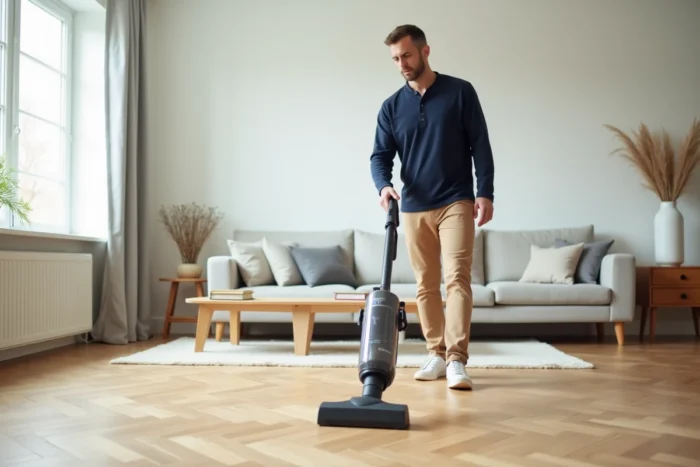
The majority of household dust enters through the front door. Shoes, clothing, bags: everything carries particles from the outside to the inside. A thick doormat outside and a second one inside significantly reduce the amount of dust that reaches the living room or bedrooms.
Taking off shoes upon entering cuts the vacuuming frequency in half. This is not a magazine tip; it’s a practical observation that anyone can verify in a week.
Ventilation also plays a direct role. Opening windows for a few minutes each morning refreshes the air and limits the accumulation of airborne particles. In humid rooms, it also reduces condensation that promotes mold, a source of stubborn stains on tile joints.
Storage and dust in living areas
Cluttered surfaces accumulate dust between objects, making cleaning longer and more tedious. Clearing low furniture and shelves of unnecessary items reduces the dusting time for each room.
We’re not talking about radical minimalism. Simply grouping small items into closed boxes or drawers makes dusting a matter of seconds instead of several minutes per shelf.
Laundry and textiles maintenance: avoid the accumulation effect
Dirty laundry piling up in an open basket in the bedroom or bathroom creates an immediate impression of disorder. Running a short wash every two days instead of a big laundry load on the weekend keeps the flow under control.
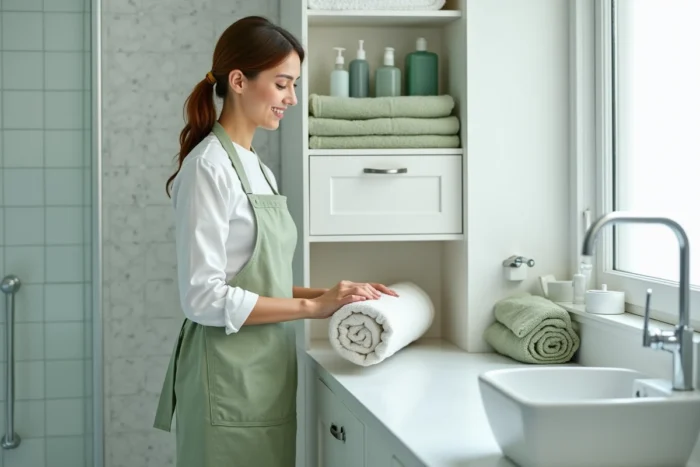
Household textiles (kitchen towels, bath towels, cushion covers) deserve more frequent rotation than one might think. A kitchen towel used for three days becomes a breeding ground for bacteria. Having a sufficient stock allows for changing without waiting for laundry day.
Distributing textile tasks throughout the week
- Monday and Thursday: underwear and everyday clothes
- Wednesday: towels, kitchen cloths, and rags
- Saturday: sheets, cushion covers, and bath towels
This type of distribution avoids marathon weekends where you do four loads in a row. Spreading laundry tasks throughout the week turns a chore into a quick gesture that doesn’t exceed a few minutes of folding per session.
Cleaning frequency by room: adapting effort to the actual level of dirt
Not all rooms get dirty at the same rate. The kitchen and bathroom require almost daily maintenance of contact surfaces. The living room can suffice with a weekly dusting and vacuuming. Bedrooms, often the least dirty rooms, only require light maintenance mid-week and a more thorough cleaning every ten days.
Adapting the cleaning frequency for each room avoids two pitfalls: neglecting high-traffic areas or wasting time on spaces that are still clean. The goal of a well-maintained home is not to clean everything all the time, but to concentrate maintenance efforts where they produce a visible result.
The last point to keep in mind: a tidy interior always looks cleaner than a clean but cluttered one. When time is short, putting away five stray items has more visual impact than vacuuming a messy room.