
When a driver pays at the pump at a Total station, the terminal does not directly debit the amount for a full tank. It triggers a pre-authorization for a maximum amount, often well above the actual fuel taken. This amount frozen on the account is not a debit: it is a temporary hold, and its release depends on several parties that do not act at the same pace.
Pre-authorization at Total stations: a mechanism distinct from classic pre-authorization
The French Banking Federation distinguishes the hold made by gas station automats from the pre-authorization practiced in hotels or car rentals. At the station, the terminal sends a request for authorization for a fixed ceiling before the customer fills up. This ceiling typically ranges between 100 and 150 euros, regardless of the desired fuel volume.
The actual amount for the fill-up is transmitted to the bank at a later stage, usually within 24 to 48 hours. It is only upon receiving this final amount that the bank can release the difference between the frozen sum and the actual debit.
In practice, for a fill-up of 55 euros, the bank statement may simultaneously show a hold of 120 euros and a debit of 55 euros. These two lines coexist until the bank reconciles the initial authorization with the actual transaction amount. This discrepancy alone explains most of the concerns, especially when the available balance suddenly drops without apparent reason.
To better understand each step of the process and the variables that influence the refund time for Total gas station deposits, one should look at the issuing bank rather than the brand.

Release time for Total deposits: why the issuing bank decides everything
Total, like most brands, transmits the final transaction to its acquiring bank within a short timeframe. The bottleneck occurs afterward: it is the cardholder’s bank that decides when to release the frozen funds.
In most cases, the release occurs within one to three business days. Some banks process the operation within a few hours, while others maintain the hold for several days, sometimes up to twelve business days when the transaction is not finalized within the standard interbank network timelines.
The type of card changes the game
Cards with systematic authorization (often associated with online accounts or entry-level offers) check the available balance with each transaction. When a hold of 120 euros is in place, the displayed available balance does not reflect the actual balance, which can lead to cascading payment refusals on other purchases.
Prepaid cards or certain international debit cards pose an additional problem: the automat may reject the card even before the fill-up begins, not due to insufficient funds, but because the card type does not support the pre-authorization mechanism used by the terminal.
Recourse if the gas station deposit remains blocked beyond the normal timeframe
When the hold persists for more than five business days, the first step is to contact your bank to check the status of the transaction. Two situations must be distinguished:
- The authorization has not been finalized by the merchant: the bank must release the funds upon the expiration of the authorization period, which varies by network (Visa, Mastercard) but does not exceed a few days.
- The amount has been captured (actually debited) for an amount greater than the fill-up: this is then a disputable payment, not just a simple temporary hold.
- A double entry persists on the statement (hold and debit of the same amount): contact both the bank and the station’s customer service simultaneously to request a manual release of the authorization.
A little-known legal recourse for excessive amounts
Article L133-25 of the Monetary and Financial Code provides a right to reimbursement when an authorized transaction did not indicate the exact amount and the sum debited exceeds what the payer could reasonably expect. This recourse must be exercised within a period of eight weeks following the debit date.
This framework theoretically applies to gas station pre-authorizations, even if in practice the hold is resolved before a customer needs to invoke this text. The existence of this provision remains useful to know when facing a bank that is slow to regularize the situation.
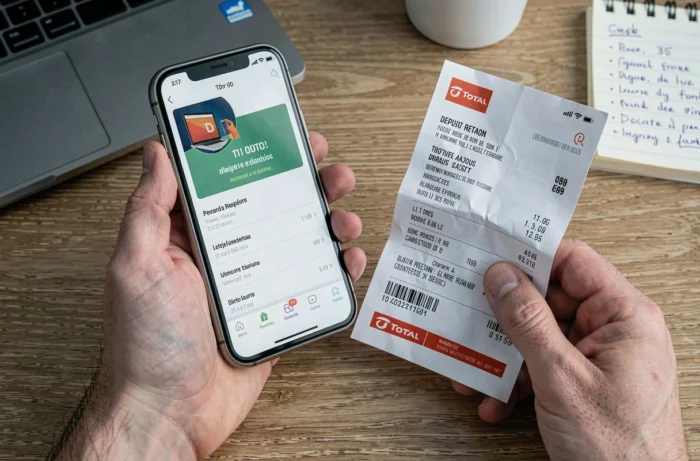
Avoid excessive holds at Total pumps: concrete actions
Paying at the counter rather than at the automat eliminates the pre-authorization mechanism. The cash register terminal directly debits the exact amount, without an intermediate hold. This option obviously only exists during the store’s opening hours.
At 24/7 automats, a few precautions can reduce the impact of the hold:
- Use a card with a payment ceiling that leaves a comfortable margin beyond the expected fill-up amount, to avoid cascading refusals on other purchases.
- Prefer a credit card with deferred debit rather than a card with systematic authorization: the hold affects the monthly ceiling, not the immediate balance.
- Check on the banking app whether the displayed line is a real debit or a “pending” operation before contacting customer service.
The refund time for the deposit at Total stations does not depend on the brand itself but on the interbank circuit and the policy of the issuing bank. A hold of one to three business days remains the norm; beyond five days, contacting the bank is justified, and legal recourse exists for cases that drag on beyond eight weeks.